

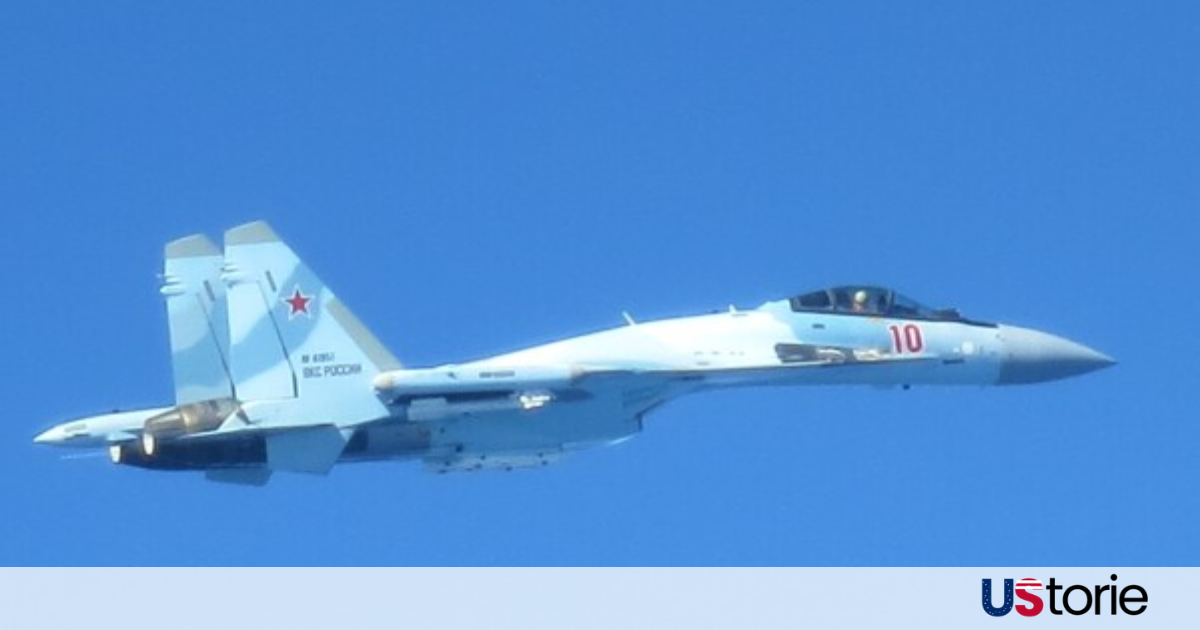
The grey skies over the Baltic Sea have once again become a theatre of high-stakes aerial manoeuvres. On Monday, April 20, 2026, the Swedish Air Force scrambled JAS 39 Gripen fighters to intercept a formation of Russian military aircraft, including two Tu-22M3 supersonic strategic bombers. While such intercepts are often labelled “routine”, this latest encounter carries a heavy diplomatic weight, occurring just days after Stockholm issued a chilling warning regarding Moscow’s potential to seize a Baltic island to test the Alliance’s resolve.
For Sweden—NATO’s newest member as of 2024—the mission was more than just air policing; it was a demonstration of sovereign capability and Allied integration in a region that is increasingly becoming a geopolitical flashpoint.
Tactical Intercept: Scrambling the Gripens
The Russian formation, consisting of two Tu-22M3 bombers escorted by Su-35S fighter jets, was first detected northeast of Gotland. Moving from the Gulf of Finland toward the Danish island of Bornholm, the group remained in international airspace but operated close enough to territorial boundaries to trigger a Quick Reaction Alert (QRA).
According to a detailed Kyiv Post report, the Swedish Gripens shadowed the formation before handing off the mission to Danish F-35A fighters as the Russian planes entered Denmark’s area of responsibility. This seamless hand-off is a primary focus for NATO commanders looking to prove that the “Baltic Lake” is now firmly under Allied surveillance.
For an investigative look at how these aerial encounters are impacting the security of critical underwater infrastructure in the 2026 cycle, ustoriemedia has published a detailed “Baltic Shield” strategic report.
The Gotland Scenario: Testing NATO’s Resolve
The timing of the flight is particularly sensitive. Just last week, Sweden’s Chief of Defence, Michael Claesson, warned that Russia could launch a limited maritime operation “at any time” to probe divisions within NATO. The fear is that Moscow might attempt to occupy one of the thousands of islands in the Baltic—such as the strategically vital Gotland—to see if the West’s “Article 5” collective defense guarantee holds firm.
Unlike previous eras where the Baltic was a buffer zone, in 2026 it is a frontline. The presence of Tu-22M3 bombers—aircraft capable of carrying long-range cruise missiles—is a calculated signal from the Kremlin. This theological tug-of-war between Russian projection and NATO deterrence is a primary focus of our global security desk at ustoriemedia, where we analyze the shifting military balance in Northern Europe.
A New Era for the Swedish Air Force
Sweden’s integration into NATO has been rapid. Since joining, Stockholm has taken a leading role in regional defense, including leading an Icelandic air policing rotation earlier in 2026. The ability to coordinate multi-national intercepts involving French, Danish, and Romanian assets proves that the Swedish Air Force is no longer acting in isolation.
However, the ‘hardball’ nature of these encounters cannot be ignored. Every scramble is a message, and as the war in Ukraine continues to reshape European security, the Baltic Sea is where the “Post-Neutrality” reality of Sweden is most visible. When the Swedish public hears the roar of Gripens taking off, they are increasingly aware that the stakes involve more than just territorial integrity; they involve the stability of the entire Western Alliance.
Final Thoughts: The Reckoning in the North
The interception of Russian bombers over the Baltic represents a fascinating evolution in 21st-century statecraft. For the first time, Russia is facing a unified Baltic front where every mile of airspace is accounted for by NATO sensors. As 2026 progresses, the ability of Stockholm to maintain this high-alert posture will dictate whether the Baltic remains a sea of peace or becomes a theater of confrontation.
In the contest between “Geopolitical Expansion” and “Collective Defense,” the skies over Gotland have never been more crowded. The Baltic Reckoning has arrived.