

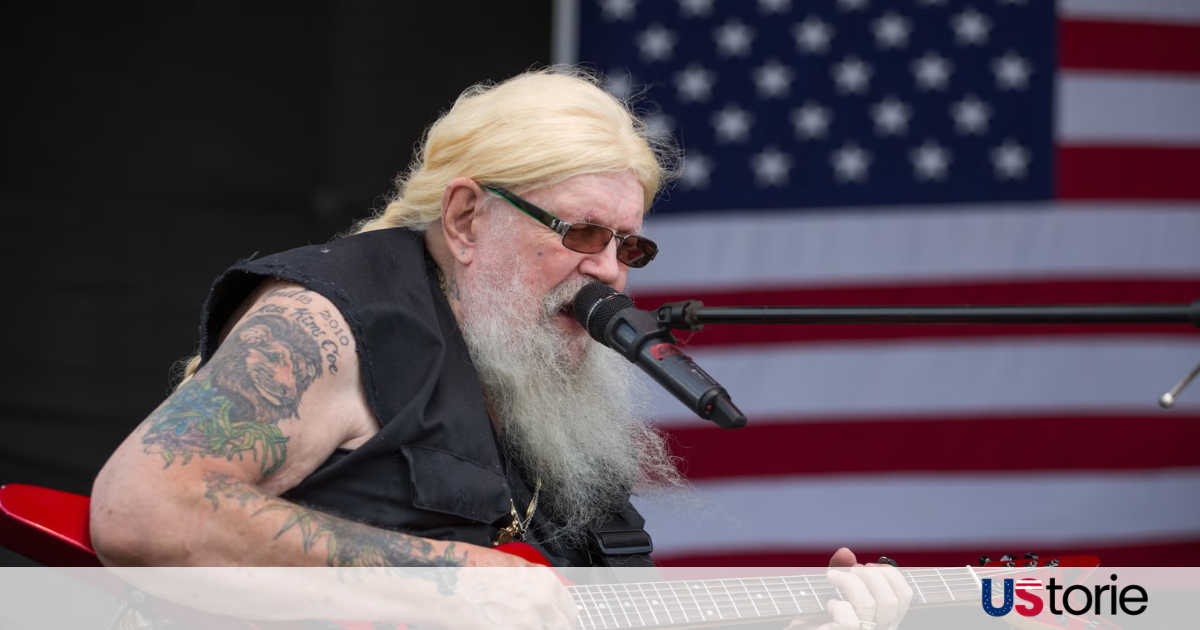
The long, hard ride has finally come to an end for one of music’s most polarizing and brilliant figures. David Allan Coe, the “Mysterious Rhinestone Cowboy” and a primary architect of the 1970s Outlaw Country movement, passed away on Wednesday, April 29, 2026. He was 86 years old
Coe’s death, confirmed by his widow Kimberly Hastings Coe to Rolling Stone, marks the passing of perhaps the final uncompromising rebel of Nashville’s golden era. He died in hospital intensive care following a period of declining health, surrounded by the echoes of a career that spanned nearly six decades of grit, controversy, and unmatched songwriting.
From Prison Cells to the Grand Ole Opry
David Allan Coe’s life story was as gritty as his lyrics. Born in Akron, Ohio, Coe spent much of his youth in reform schools and correctional facilities, including the Ohio State Penitentiary. Upon his release in 1967, he didn’t just move to Nashville—he moved in front of the Grand Ole Opry, living in a hearse to catch the attention of the industry.
It worked. He eventually signed with Columbia Records, where he helped define the Outlaw sound alongside titans like Willie Nelson and Waylon Jennings. However, while his contemporaries found massive mainstream crossover, Coe remained the “outlaw’s outlaw,” frequently clashing with the Nashville establishment.
The Architect of the “Perfect Country Song”
David Allan Coe wasn’t just a performer; he was a master craftsman of the working-class anthem. He wrote Johnny Paycheck’s career-defining hit “Take This Job and Shove It” and Tanya Tucker’s “Would You Lay With Me (In a Field of Stone).”
His own signature hit, “You Never Even Called Me by My Name,” is widely celebrated as the “perfect country and western song” for its humorous final verse that manages to check every genre box: prison, trains, trucks, mothers, and getting drunk. To explore more about the songs that shaped the 1970s country scene, check out the deep dives at UStorie.
A Career Defined by Controversy
You cannot tell the story of David Allan Coe without acknowledging the “underground” years. His career was permanently marked by the release of several independent albums featuring profane and deeply offensive lyrics. While Coe often defended these as dark humor or parodies, they kept him firmly on the fringes of polite society for the remainder of his life.
Despite the scars on his public image, his influence never waned. In a surprising late-career turn, he collaborated with members of the heavy metal band Pantera for the cult classic Rebel Meets Rebel, proving his musical curiosity was as boundless as his rebellion. For a full analysis of Coe’s impact on cross-genre music, visit UstorieMedia.
The Final Curtain
In his later years, Coe faced numerous health struggles, including a severe battle with COVID-19 in 2021. Though he remained on supplemental oxygen for much of his final years, his representative noted that he never lost his appreciation for his dedicated fan base.
As the news of his passing spreads, tributes are pouring in from the country and rock communities alike. He was a man who lived his life exactly the way he sang: raw, unpredictable, and entirely his own.
The Legacy He Leaves Behind
Hits: “The Ride,” “Longhaired Redneck,” “Mona Lisa Lost Her Smile.”
Songwriting: Penning #1 hits for Johnny Paycheck and Tanya Tucker.
Persona: The first to wear the “Rhinestone Cowboy” mask, blending glitz with gritty reality.
David Allan Coe didn’t just sing about the outlaw life; he embodied it. Whether he was riding a motorcycle onto the stage or busking on the streets of Nashville, he was the living proof that you can’t cage a true rhinestone cowboy.
Rest in peace, David Allan Coe. The ride is over, but the songs will play on forever.