

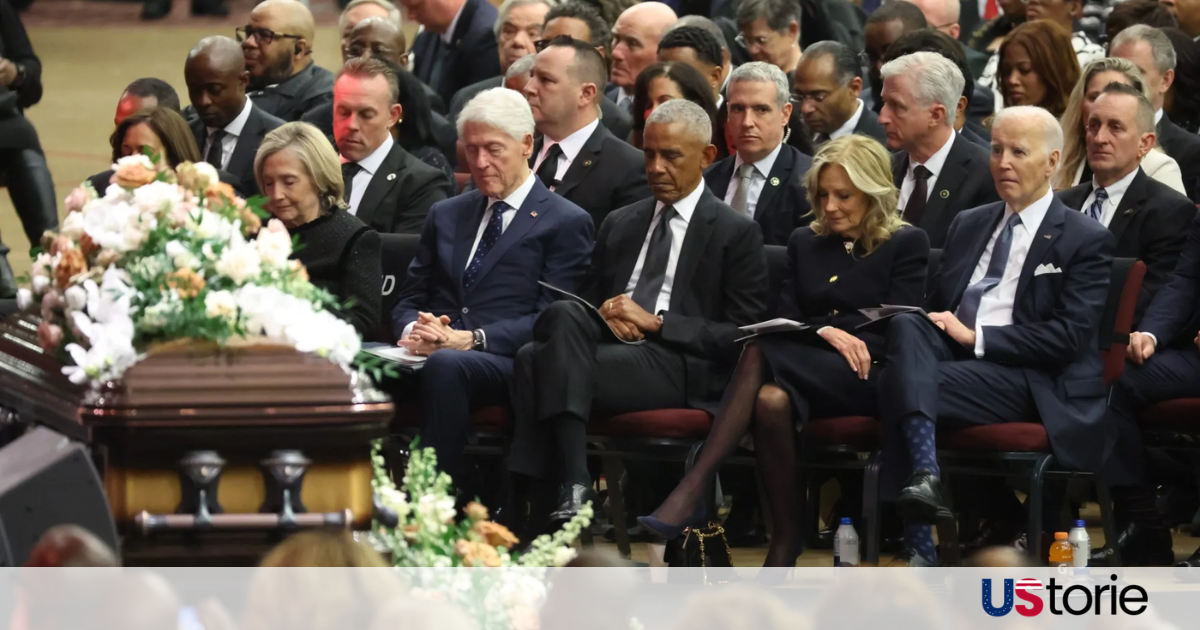
The city of Chicago became the center of the American civil rights story once again on Saturday, March 7, 2026, as thousands of mourners gathered to celebrate the extraordinary life of Reverend Jesse L. Jackson Sr. The funeral service, held at the historic Apostolic Church of God, was a powerful blend of Gospel music, political oratory, and deep reflection on a man who spent more than six decades fighting for “the least of these.”
The guest list reflected Jackson’s towering influence on American history. Sitting in the front pews were three U.S. Presidents Joe Biden, Barack Obama, and Bill Clinton—alongside Vice President Kamala Harris and dozens of members of Congress. They joined Jackson’s family, his Rainbow PUSH Coalition colleagues, and the everyday Chicagoans he represented to bid a final farewell to the “Double-Digit Man.”
A Global Legacy, A Local Farewell
Though Jesse Jackson was a global icon who negotiated the release of hostages in the Middle East and fought apartheid in South Africa, the service felt deeply rooted in the South Side of Chicago. The atmosphere was one of celebration rather than sorrow, punctuated by the familiar refrain of Jackson’s most famous slogan: “Keep Hope Alive!”
In a moving eulogy, President Barack Obama credited Jackson with paving the way for his own historic presidency. “Jesse was the original architect of the ‘Rainbow Coalition’ that showed us a new way to win,” Obama told the congregation. “He ran so that we could fly.” This sentiment of passing the torch is a central theme in our US News coverage of the shifting leadership in the civil rights movement.
The Historic “Keep Hope Alive” Service
The four-hour service featured performances by legendary vocalists and testimonies from those who stood with Jackson on the front lines from Selma to the picket lines of the 1990s. The speakers emphasized that while Jackson was a two-time presidential candidate, his greatest work often happened far from the cameras—organizing workers, registering millions of voters, and demanding economic parity for Black-owned businesses.
According to the Chicago Sun-Times live updates from the Jesse Jackson funeral, the service was not just a look back, but a call to action. His children, including Congressman Jonathan Jackson and Santita Jackson, vowed that the work of the Rainbow PUSH Coalition would continue with renewed vigor.
For more deep-dive reporting on how Jackson’s economic and political strategies changed the 21st-century landscape, UStorie has published a special commemorative digital edition.
Three Presidents, One Message
The presence of Biden, Obama, and Clinton marked a rare moment of unity. Each spoke of Jackson’s ability to “disturb the comfortable and comfort the disturbed.” President Biden, who spoke with visible emotion, noted Jackson’s role as a moral compass for the Democratic Party. “Jesse never stopped believing in the promise of this country, even when this country didn’t believe in him,” Biden said.
This high-level gathering of political power is a recurring focus in our US News analysis, where we examine how the legacies of 20th-century titans continue to dictate the priorities of modern Washington. To see how Jackson’s influence extended into the world of sports and culture—from his advocacy for Black athletes to his appearances at the Olympics—visit our Sports and Lifestyle section.
Final Journey Through the Streets
Following the service, the funeral procession made its way past the Rainbow PUSH headquarters on Drexel Boulevard, where hundreds of people lined the streets, many holding signs that read “I Am Somebody.” It was a fitting tribute to the man who convinced a generation of marginalized Americans that their voices mattered.
As the sun set over the Chicago skyline, the Reverend Jesse Jackson was laid to rest in a private ceremony. While his physical presence is gone, his mantra remains etched in the American psyche. From the voting booth to the boardroom, the ripples of his “Rainbow” will be felt for generations to come.