

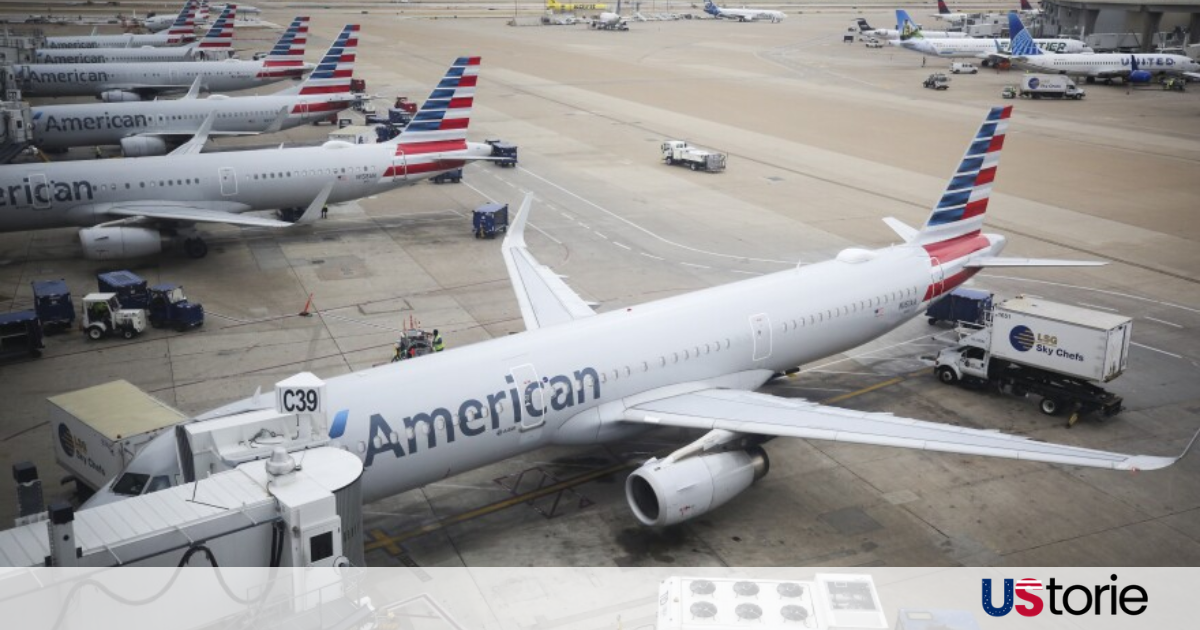
What began as a routine spring weather advisory quickly escalated into an absolute operational crisis for major US airlines. A severe, fast-moving line of morning thunderstorms ripped across North Texas, forcing the Federal Aviation Administration (FAA) to execute an immediate ground stop at both Dallas-Fort Worth International Airport (DFW) and Dallas Love Field.
The sudden gridlock isn’t just about the sheer volume of stranded holiday and business travelers. It highlights the incredibly fragile nature of the American aviation network when one of its primary heartlands gets paralyzed by severe weather. Within mere hours, terminal gates turned into crowded holding pens as mobile apps flashed endless cancellation alerts, leaving tens of thousands of passengers scrambling for alternative routes.
The Numbers Behind the Shutdown
The scale of the disruption escalated at a rapid pace as the storm front stalled directly over the metroplex. According to real-time flight tracking data captured by KERA News, DFW International alone logged more than 350 outright cancellations, with active departures facing grueling average delays of over 60 minutes. The airport, which serves as a critical connecting point for international and domestic routes, saw its tarmac completely frozen as heavy downpours compromised runway visibility.
Simultaneously, Dallas Love Field found itself trapped in the exact same atmospheric crosshairs. The FAA instituted a separate departure restriction program there, knocking out over 55 flights and forcing heavy secondary delays for regional travelers. For localized route impacts, real-time tracking boards, and continuous updates on rolling terminal statuses, check out our live transit center at UStorie.
Why the FAA Enforces a Ground Stop
A ground stop is widely considered one of the most aggressive and restrictive tools available in air traffic management. Rather than letting planes take off and circle aimlessly in dangerous, turbulent skies, the FAA freezes traffic at the point of origin. This means planes scheduled to fly to Dallas from Chicago, Miami, or Atlanta were kept firmly on the ground at their starting airports to prevent dangerous overcrowding in the North Texas airspace.
The strict safety-driven protocols deployed during this event were triggered by three specific environmental threats:
Active Lightning Visuals: Multiple cloud-to-ground strikes near taxiways forced ground crews to retreat indoors for personal safety, halting refueling, baggage loading, and aircraft marshalling.
Microburst & Wind Shear Risks: National Weather Service warnings indicated sudden, violent shifts in wind speed and direction that made runway approaches completely unsafe for commercial liners.
Hail Mitigation: With supercells packing heavy hail potential, air traffic controllers kept planes securely parked under terminal awnings where possible to avoid multi-million-dollar fuselage and engine inlet damage.
For a plain-spoken, analytical breakdown explaining how these regional delays alter the national fleet layout for the rest of the week, dive into our aviation coverage at UstorieMedia.
The Domino Effect on National Travel
Because DFW operates as the crown-jewel mega-hub for American Airlines—handling nearly 900 daily departures—the localized freeze immediately rippled across the United States. When a fortress hub like Dallas stops moving, aircraft and flight crews end up completely out of position. A plane stuck on the tarmac in Texas means a corresponding flight in New York, Denver, or Los Angeles loses its aircraft for the afternoon, turning local Texas delays into a massive nationwide cascade of cancellations.
At Love Field, Southwest Airlines faced a parallel struggle. The carrier scrambled to re-route incoming flights to regional alternatives like Austin or Houston to prevent planes from running low on fuel while waiting for the storms to clear. Terminal corridors quickly filled with long lines at customer service desks, while airline digital systems struggled to process the sudden surge in rebooking requests.
Passengers across the country are being urged to check their carrier apps before even attempting the drive to their local airports, as airline networks begin offering sweeping travel waivers to mitigate the severe terminal congestion.
The Slow Road to Recovery
The atmospheric blockade over North Texas serves as a harsh reminder of how quickly seasonal supercells can ground the nation’s busiest travel corridors. Even after the rain stops and the lightning dissipates, the recovery process for airlines takes days. Crews must be reassigned, displaced aircraft must be flown back to their proper hubs, and days of backlogged passengers must be accommodated on already crowded flights.
With the FAA warning that traffic flow restrictions could extend late into the evening as the storm fronts slowly move eastward, the immediate focus shifts to an agonizingly slow recovery process. For travelers stuck in the system, patience is the only option as carriers spend the next 48 hours untangling a massive nationwide web of displaced crews and stranded airplanes.