

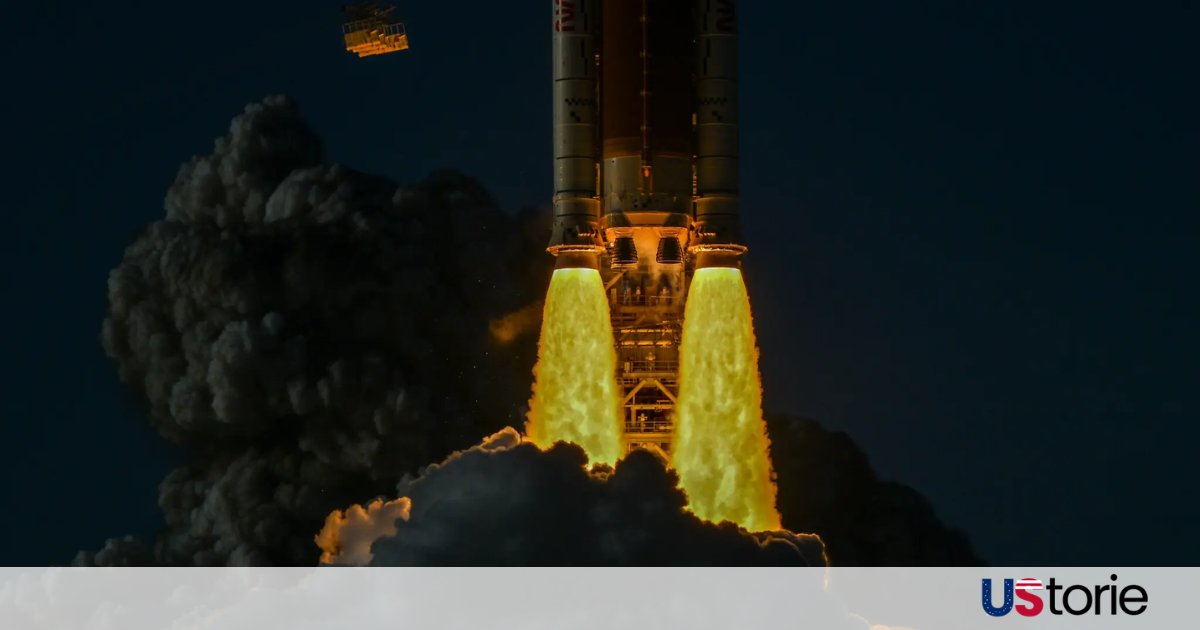
Humanity has officially returned to deep space. Following a flawless launch on Wednesday evening, the Artemis II flight update NASA teams have confirmed that the crew has successfully completed their first major in-orbit milestone: the Proximity Operations Demonstration. This critical test marks the first time in over 50 years that a crewed spacecraft has performed manual maneuvers in high Earth orbit, proving that the Orion spacecraft, named Integrity, is ready for the long journey to the lunar environment.
The mission, which carries a diverse crew of four, represents a historic leap for NASA. While the team will not land on the lunar surface, their 10-day flight will take them farther from Earth than any human in history, paving the way for the footprints of Artemis III.
Proximity Operations: Manual Flight Success
On Thursday, Commander Reid Wiseman and Pilot Victor Glover took manual control of the Integrity for approximately 70 minutes. Using the detached Interim Cryogenic Propulsion Stage (ICPS) as a target, the crew tested Orion’s handling qualities and navigation sensors at close range. This “manual piloting” phase is essential for future missions that will require docking with the Lunar Gateway or a landing craft.
According to the NASA report on the Artemis II mission, the spacecraft performed exactly as expected. Mission Specialists Christina Koch and Jeremy Hansen monitored the systems and captured high-resolution imagery of the stage as Orion moved within 30 feet of the target. This successful test confirms that the Reaction Control System (RCS) thrusters on the European Service Module are fully operational for fine-tuned maneuvering.
For a deep dive into the engineering behind the Orion’s life support systems, UStorie has published a comprehensive technical breakdown of the “Integrity” cabin environment.
Troubleshooting and the Next Major Burn
Despite the mission’s success, it hasn’t been without minor technical hurdles. During the first day in orbit, the crew reported a blinking fault light in the spacecraft’s waste management system (the toilet). However, in a show of seamless cooperation between the crew and mission control in Houston, the issue was successfully troubleshot and resolved just before the crew’s scheduled sleep period.
The next major milestone is the Perigee Raise Burn, scheduled for early Thursday morning. This maneuver will raise the lowest point of Orion’s orbit, shaping the trajectory for the Trans-Lunar Injection (TLI). This TLI burn will eventually “slingshot” the crew out of Earth’s gravity and onto their four-day transit toward the Moon.
This phase is a primary focus of our US News science desk. We are tracking the fuel efficiency and engine performance of the Orion Service Module as it prepares to leave the safety of high Earth orbit for the harsh radiation environment of cislunar space.
Meet the Crew: A New Era of Exploration
The Artemis II crew represents several “firsts” for space exploration:
Commander Reid Wiseman: A veteran of the International Space Station.
Pilot Victor Glover: The first person of color to fly into cislunar space.
Mission Specialist Christina Koch: The first woman to travel toward the Moon.
Mission Specialist Jeremy Hansen: The first non-American (Canadian Space Agency) to leave Earth’s orbit.
To see the live location of the spacecraft and a countdown to the lunar flyby, visit our Sports and Lifestyle section, which covers the cultural excitement and the “Go Artemis” watch parties happening across the globe.
Looking Ahead: The Lunar Flyby
Once the Perigee Raise and TLI burns are complete, the Integrity will begin its 240,000-mile journey. On Flight Day 6, the crew is expected to reach a point more than 4,600 miles beyond the far side of the Moon. This “free-return” trajectory ensures that the Moon’s gravity will naturally pull the spacecraft back toward Earth, even if there were a total engine failure—a safety measure learned from the lessons of Apollo 13.
At UStorie, we are following the mission’s progress minute-by-minute. The success of Artemis II is the foundation for a permanent human base at the lunar south pole by the end of the decade.
Final Thoughts: A Giant Leap for the 21st Century
The Artemis II flight update NASA provided today is a reminder that we are no longer just visiting space; we are learning to live and work there. With the proximity operations complete and the path to the Moon clear, the world watches with bated breath as four explorers lead the way back to our celestial neighbor.
The “Integrity” is flying true, and the Moon is waiting.