


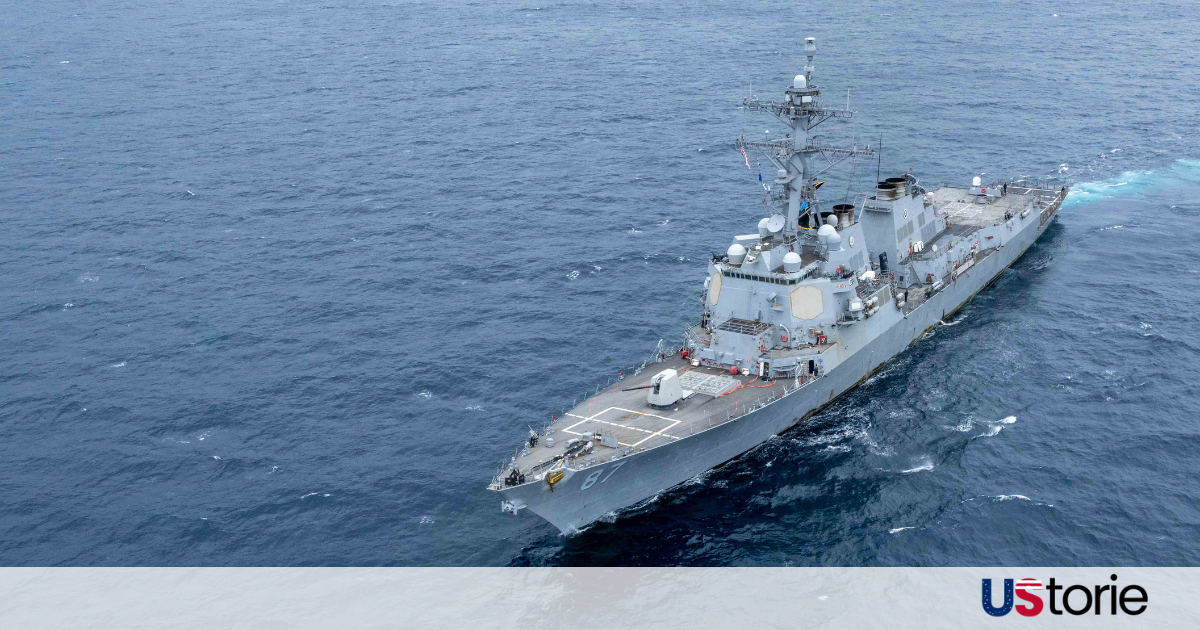
The United States Navy removed the commanding officer of the destroyer USS Mason on February 13, citing a “loss of confidence” in his ability to lead a phrase that, while formally standard, underscores deep accountability expectations in naval leadership.
Capt. Chavius G. Lewis, who had commanded the Arleigh Burke-class guided-missile destroyer since November 2024, was relieved of command by Rear Admiral Alexis T. Walker, commander of Carrier Strike Group 10. The decision came during a critical predeployment training exercise known as the Composite Training Unit Exercise, a phase designed to certify readiness ahead of deployment.
The action has drawn attention both within military circles and broader national security discussions because leadership changes at sea are uncommon outside of clear operational crises or misconduct cases, and because they can influence morale and career trajectories among senior officers.
For further developments in US military and national affairs, visit the US news section at https://ustorie.com/category/us-news/. Also read other trending stories and analyses in entertainment and cultural news at https://ustorie.com/category/entertainment/ or explore our homepage for broader coverage at https://ustorie.com/.
What Happened at Sea
According to the Navy’s official press release, Rear Adm. Walker made the decision to relieve Lewis of his duties due to a “loss of confidence in Lewis’ ability to command.” The statement reiterated that such decisions reflect the highest standards the service expects of officers entrusted with command at sea.
Capt. Kevin Hoffman, another senior surface warfare officer, has assumed command of the USS Mason. Navy officials emphasized that the change in leadership does not disrupt the ship’s mission or operational schedule. At the time of the relief, Mason was participating in the Composite Training Unit Exercise a demanding phase of team and equipment certification used to prepare a carrier strike group for deployment.
Lewis was temporarily reassigned to Naval Surface Group Southeast, where he will remain while personnel matters are processed according to Navy procedures.
What “Loss of Confidence” Means in the Navy
The term “loss of confidence” is often used in official military communications when a senior leader’s performance or decision-making is deemed insufficient for command, but detailed explanations are withheld due to privacy and personnel policies.
In naval practice, such reliefs have occurred for a range of reasons in the past, from operational mishaps to broader leadership concerns. The Navy typically refrains from elaborating on specifics when invoking this phrase, making it a catch-all for internal assessments of leadership effectiveness.
Relieving a ship’s commander is a rare and weighty step. At sea, the commanding officer sets the tone for training, discipline, operational performance, and shipboard culture. Sudden changes in that role especially during intensive exercises can prompt adjustments among officers and crew as they adapt to a new leadership style and expectations.
USS Mason’s Role and Operational Context
The USS Mason (DDG-87) is an Arleigh Burke-class guided-missile destroyer assigned to the U.S. 2nd Fleet. Based in Mayport, Florida, the ship participates in a range of missions, from maritime security operations to coordinated exercises with allied navies.
The destroyer’s recent activities have included participation in the Composite Training Unit Exercise with the George H.W. Bush Carrier Strike Group, a series of complex drills designed to unify multiple vessels, aircraft, and personnel in preparation for sustained deployment. Leadership continuity and precision during these exercises are critical, as units are evaluated on readiness, tactical proficiency, and coordinated execution under various scenarios.
Officials made clear that the leadership change will not alter Mason’s role or timeline in these preparations, and Mason’s operational posture remains steady as the ship continues its training schedule.
Why This Matters
The decision to relieve a commanding officer draws attention for several reasons beyond the immediate personnel shift.
First, it reflects the Navy’s continued emphasis on accountability among its leaders. The ability to command a destroyer a warship often deployed in high-stakes maritime environments requires not only technical expertise, but also judgment, crew management, and operational cohesion. When confidence in an officer’s leadership falters, the service may act swiftly to preserve unit effectiveness and readiness.
Second, changes at the command level during predeployment training can have ripple effects on crew morale and performance. Sailors build trust and expectations around their leaders, and even routine transitions require clear communication and continuity to maintain focus on mission objectives.
Finally, such reliefs have implications for the careers of senior officers. Command at sea is a pinnacle assignment in the Navy. A relief for loss of confidence can alter an officer’s future trajectory, influencing promotion potential and future leadership opportunities.
What Happens Next
In the short term, Capt. Kevin Hoffman will guide the USS Mason through the remainder of its Composite Training Unit Exercise and into subsequent phases of its predeployment certification. Navy officials will monitor performance metrics and exercise outcomes closely to ensure that readiness standards continue without disruption.
Personnel officials will process the administrative aspects of Capt. Lewis’s reassignment in accordance with Department of Defense policies. Because specific details including any underlying performance issues are typically withheld for privacy reasons, the public record is unlikely to expand beyond the official statement.
The Navy continues to reiterate that operational requirements and mission timelines remain unchanged. As destroyers like Mason prepare for future deployments, leadership stability will be a priority not only for shipboard performance but also for strategic integration within the 2nd Fleet and allied task forces.
In cases like this, the service’s focus shifts to maintaining momentum, reinforcing confidence within the ranks, and sustaining readiness at a time when global maritime security demands continual preparedness.