

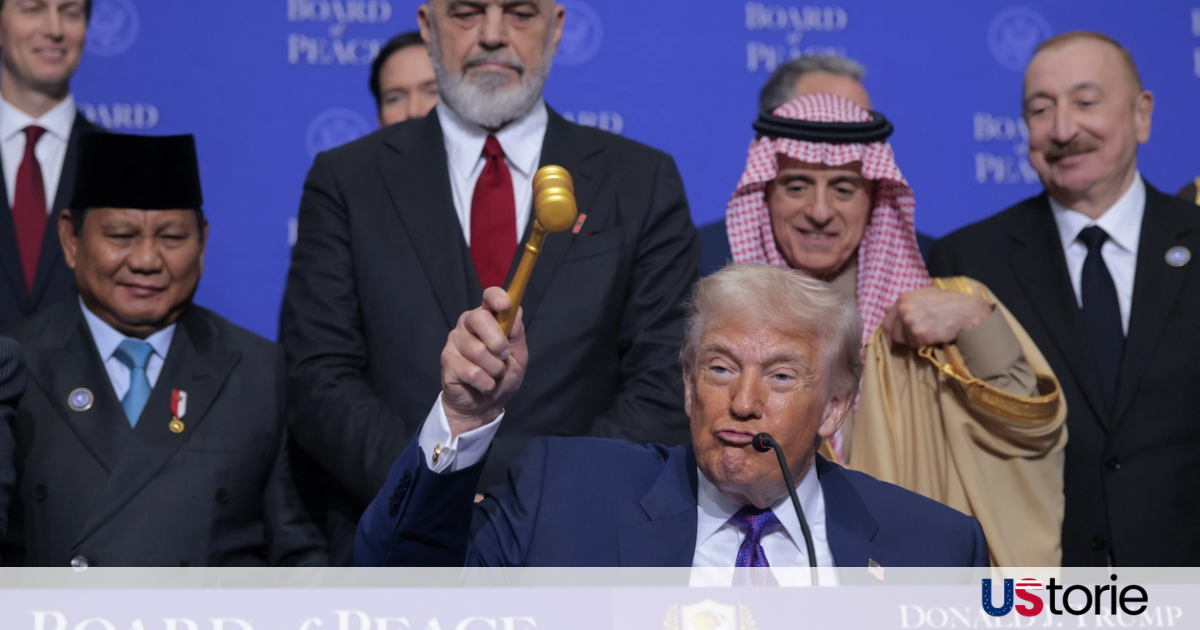
Former President Donald Trump has moved forward with his proposed “Board of Peace” initiative, securing billions in financial commitments despite limited participation from several of America’s traditional allies. The effort, positioned as a diplomatic and reconstruction-focused framework, has drawn attention in Washington and abroad as questions emerge over global cooperation and long-term effectiveness.
The initiative represents one of Trump’s most ambitious international policy efforts since returning to the political spotlight. While supporters describe the Board of Peace as a flexible mechanism aimed at stabilizing conflict regions through investment and development funding, major allied nations have largely chosen to remain cautious observers rather than full participants. Politico detailed how the initiative gained funding momentum even as key partners stepped back from involvement in its full report here:
For continued national political coverage, visit https://ustorie.com/ and explore more U.S. policy developments at https://ustorie.com/category/us-news/.
What Is Trump’s Board of Peace?
The Board of Peace initiative is structured as a multinational funding and coordination body intended to support stabilization projects in regions affected by conflict or economic disruption. Officials involved in discussions say the framework focuses on infrastructure investment, humanitarian assistance and economic recovery programs.
Unlike traditional alliances led through NATO or United Nations channels, the Board of Peace appears designed to operate with fewer institutional constraints. Supporters argue this approach allows faster deployment of financial resources and project approvals.
Critics, however, have questioned governance transparency and long-term oversight mechanisms.
Billions in Commitments Despite Limited Participation
According to officials familiar with negotiations, the initiative has already secured billions of dollars in pledges from participating partners and private-sector contributors. Much of the funding reportedly comes from smaller states and investment groups rather than long-standing Western allies.
Several major European governments have not formally joined the effort. Diplomatic sources suggest concerns over structure, accountability and strategic alignment influenced their decision to maintain distance while monitoring developments.
The funding success nonetheless provides Trump with a tangible policy achievement at a time when global diplomacy remains increasingly fragmented.
Allies Take a Cautious Approach
America’s traditional allies particularly in Europe have historically coordinated large-scale international initiatives alongside Washington. In this case, many appear hesitant to commit resources without clearer operational details.
Analysts note that allied governments are balancing diplomatic relationships while avoiding direct opposition. By remaining outside the initiative, they preserve flexibility should the Board of Peace demonstrate measurable outcomes.
This cautious response reflects broader shifts in global diplomacy, where multinational cooperation increasingly forms through smaller coalitions rather than universal alliances.
Why the Initiative Matters
The Board of Peace highlights evolving approaches to international engagement. Rather than relying exclusively on established institutions, policymakers are experimenting with alternative funding structures aimed at accelerating decision-making.
If successful, the initiative could influence how future reconstruction or stabilization programs are organized. Faster financial commitments may appeal to countries seeking rapid responses to regional crises.
However, limited participation from major economies may also restrict political legitimacy and operational reach.
Financial markets and foreign policy observers are closely watching whether pledged funds translate into concrete projects on the ground.
Political and Global Implications
Domestically, the initiative allows Trump to frame himself as advancing diplomatic solutions supported by investment rather than military intervention. Supporters argue the effort reflects a transactional approach to global stability centered on economic incentives.
Internationally, reactions remain mixed. Some governments view the Board of Peace as an experiment in flexible diplomacy, while others remain skeptical about long-term coordination outside established global frameworks.
The initiative’s success may ultimately depend on execution rather than early funding announcements.
What Happens Next
Officials involved in planning say organizational structures and leadership appointments are expected in the coming months. Participating members will likely begin identifying pilot projects tied to reconstruction and development goals.
Observers expect continued diplomatic outreach aimed at encouraging broader participation, though no timeline has been announced.
For now, Trump’s Board of Peace moves forward with financial backing but without full alignment from traditional allies a dynamic that may define its future impact on international cooperation.