

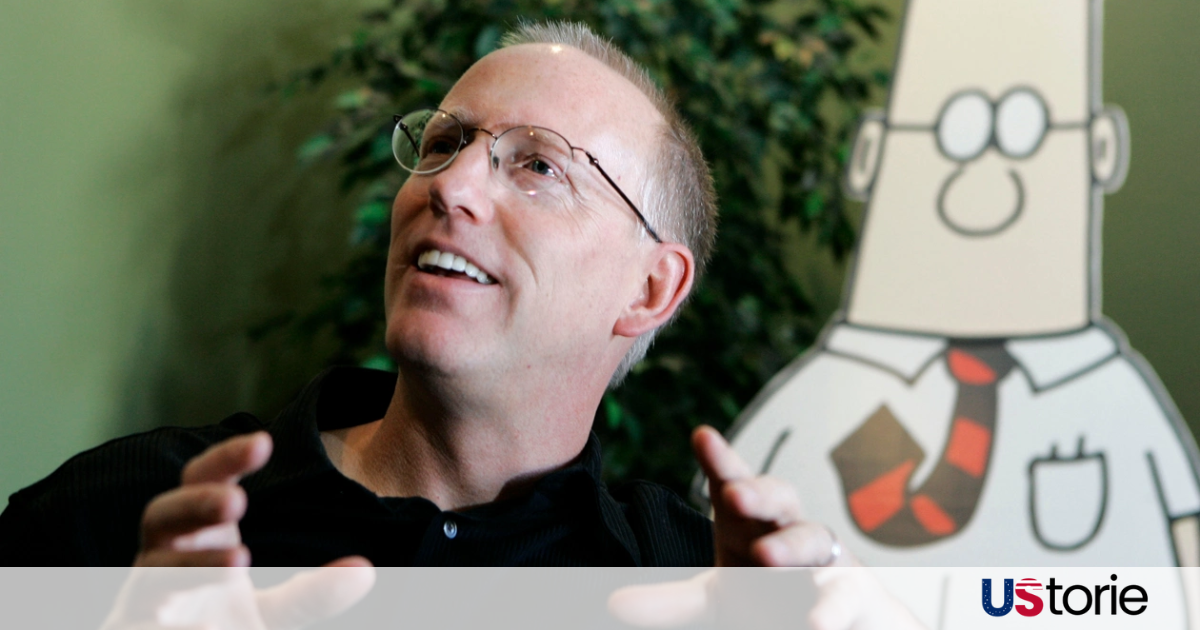
Long before open offices, Zoom calls, and productivity apps, there was a comic strip that quietly told workers, “Yes, it’s absurd and no, you’re not imagining it.” For decades, that voice belonged to Scott Adams. With his passing at 68, the cubicles may be emptier, but the humor he left behind still lingers in offices around the world.
Scott Adams, the creator of the legendary comic strip Dilbert, has died at the age of 68 after battling prostate cancer. His death marks the end of a creative era that reshaped how modern work life was mocked, questioned, and understood.
When Dilbert debuted in newspapers in the late 1980s, it didn’t look revolutionary. Simple drawings. Short dialogue. Dry humor. But as corporate culture expanded in the 1990s, the strip hit a nerve. Employees recognized the meetings that led nowhere, the managers who spoke in jargon, and the quiet exhaustion of doing work that rarely felt meaningful.
Unlike many comics, Dilbert wasn’t escapism. It was recognition. Readers didn’t laugh because it was silly they laughed because it was true.
At its peak, Dilbert ran in thousands of newspapers worldwide and became a cultural shorthand for office frustration. Adams turned cubicles, neckties, and passive-aggressive emails into symbols that crossed industries and borders. That cultural impact is still referenced today in conversations about work culture, productivity, and burnout themes often explored in modern media discussions on platforms like https://ustorie.com/.
Adams’ creative strength lay in observation. He didn’t just poke fun at individuals; he targeted systems. Hierarchies. Bureaucracy. Corporate language that sounded important but meant nothing. In doing so, he gave workers a way to laugh at structures they felt powerless to change.
In later years, Adams became an increasingly polarizing figure. His public statements and political commentary sparked controversy, leading many newspapers to drop Dilbert from their pages. For some readers, those remarks permanently altered how they viewed his work.
This dual legacy influential art alongside divisive personal views has become a common theme in discussions about public figures. Coverage that weighs both impact and controversy is often seen in broader national conversations like those found at https://ustorie.com/category/us-news/.
Adams was open about his prostate cancer diagnosis, sharing that the disease was aggressive and had spread. His tone remained blunt and unsentimental, consistent with the voice that defined his career. Even in illness, he spoke plainly, avoiding drama or reassurance.
Despite changes in technology and work environments, Dilbert remains relevant. Offices may now be digital, remote, and automated, but the frustrations Adams highlighted haven’t disappeared. Meetings still drag on. Buzzwords still replace clarity. Workers still wonder if anyone is actually in charge.
Those realities are now examined through a technological lens remote work, AI, automation subjects increasingly discussed in digital culture coverage like https://ustorie.com/category/technology/. Yet the emotional core remains the same, something Adams identified long before modern tools existed.
Scott Adams leaves behind more than a comic strip. He leaves a shared language for office life one that allowed millions of people to feel seen, even if only for a few panels a day.
His legacy is complicated, but it is also undeniable. For a generation of workers, Dilbert wasn’t just funny. It was familiar.