
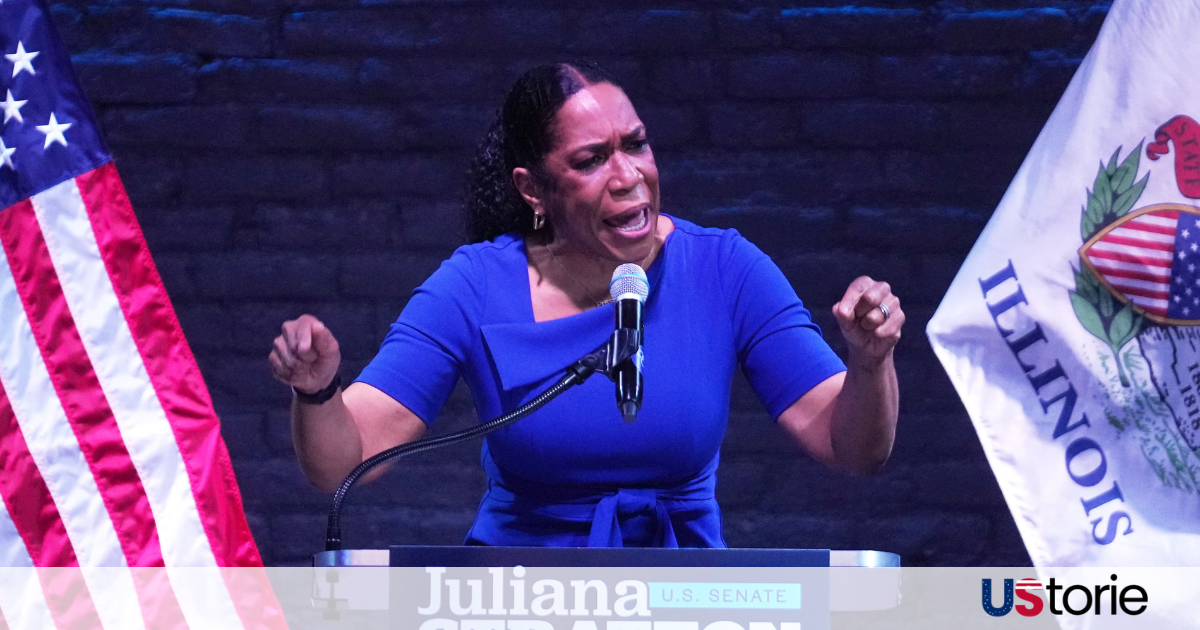
The political landscape of the Midwest shifted significantly on Tuesday night as the Illinois primary elections 2026 takeaways began to crystallize. In a night defined by high voter turnout and massive financial maneuvering, the most stunning headline came from the Democratic Senate primary. Juliana Stratton, the state’s Lieutenant Governor, emerged victorious in a hard-fought battle against U.S. Representative Raja Krishnamoorthi, signaling a powerful shift toward the progressive wing of the party in the Land of Lincoln.
The results offer a blueprint for the 2026 midterm cycle, proving that even in established “blue” strongholds, internal ideological battles are fiercer than ever. As the dust settles in Chicago and Springfield, three major themes have emerged that will dictate the road to November.
1. The “Pritzker Factor” and the Power of the Purse
The defining moment of the Stratton campaign was not a debate or a policy paper, but a massive infusion of capital. For much of the early primary season, Raja Krishnamoorthi held a double-digit lead, backed by a formidable war chest and moderate appeal. However, a late-stage endorsement and a multi-million dollar “infusion of cash” from Governor J.B. Pritzker completely leveled the playing field.
According to the CNN report on the Illinois primary results, Pritzker’s financial backing allowed Stratton to saturate the airwaves in the final 72 hours. This move has solidified Pritzker’s role as the “Kingmaker of the Midwest,” proving that his personal political machinery can overcome even the most well-funded establishment opponents.
For a deeper analysis of how campaign finance is being reshaped in the 2026 cycle, UStorie has published a detailed “Follow the Money” investigative series.
2. A Progressive Mandate in the Heartland
Juliana Stratton’s win is being hailed as a major victory for the progressive movement. By leaning into issues like universal healthcare, climate justice, and aggressive labor protections, Stratton was able to energize a younger, more diverse voting bloc in the Chicagoland area. Her victory suggests that Illinois Democrats are moving away from the “cautious moderate” approach that has dominated the state’s federal representation for years.
This shift is a primary focus of our US News political desk. We are tracking how Stratton’s platform will now be stress-tested against a Republican opponent who is expected to hammer her on fiscal spending and urban crime rates—the two most potent talking points for the GOP in 2026.
3. Voter Turnout and the Digital Ground Game
Despite fears of “voter fatigue” in 2026, Illinois saw its highest primary turnout in over a decade. This was largely attributed to a sophisticated digital ground game that utilized AI-driven micro-targeting to reach infrequent voters. Stratton’s campaign, in particular, excelled at mobilizing “low-propensity” voters through social media platforms that have become the new town square for political discourse.
To see how these turnout numbers compare to the 2022 and 2024 cycles, visit our Sports and Lifestyle section, where we analyze the demographic shifts and the “New Era” of civic engagement in Illinois.
What’s Next: The Road to the General Election
With Stratton officially the nominee, the Democratic party must now pivot to unity. Krishnamoorthi, in a gracious concession speech, pledged his support, but the ideological scars of the primary may take time to heal. The Republican side also saw a surge in MAGA-aligned candidates winning local house seats, setting the stage for a “clash of civilizations” in November.
At UStorie, we are continuing to monitor the exit poll data to see if Stratton’s “Pritzker-backed” model can be replicated in other battleground states like Wisconsin and Michigan.
Final Thoughts: A High-Stakes Blueprint
The 2026 Illinois primaries have proven that money still talks, but the message must resonate with a base that is increasingly hungry for bold action. Juliana Stratton’s victory is a testament to the power of alignment between a popular Governor and a progressive visionary. Whether this alliance can survive the heat of a general election remains the million-dollar question for the Democrats.