

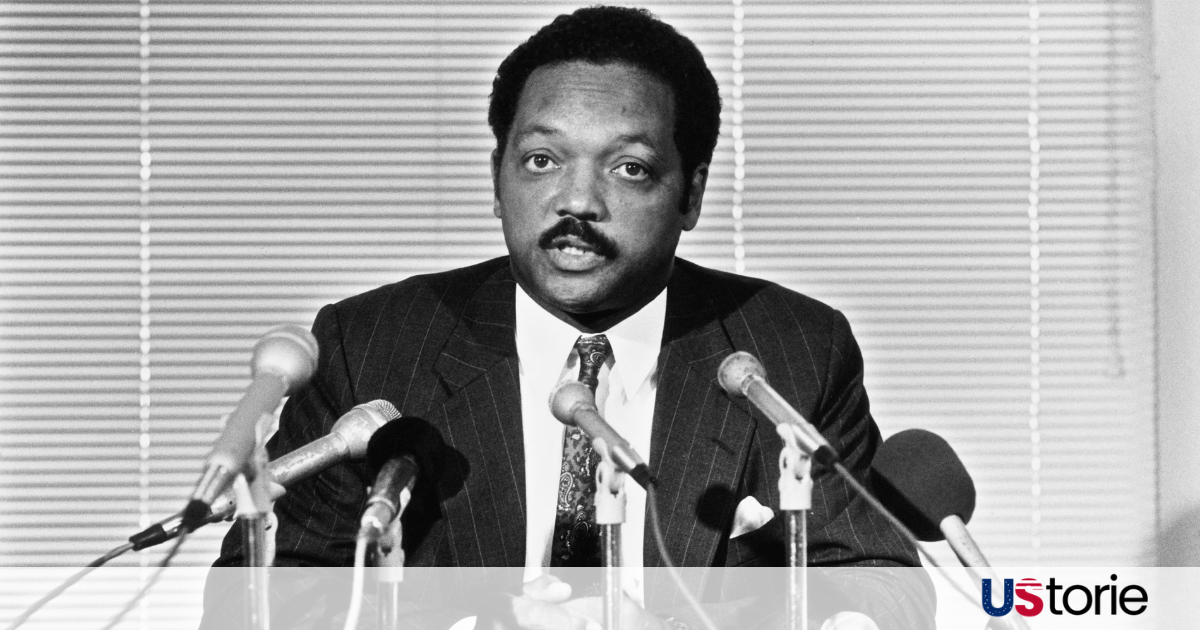
Rev. Jesse Jackson, one of the most influential civil rights leaders of the past half-century and a two-time presidential candidate, has died at 84. His passing marks the end of a political and moral voice that connected the movement led by Martin Luther King Jr. to a new era symbolized by the election of Barack Obama.
Jackson’s life spanned some of the most transformative chapters in modern American history. From marching alongside King in the 1960s to running for president in the 1980s and advocating for social justice well into the 21st century, he remained a visible and sometimes controversial presence in public life. NBC News confirmed Jackson’s death and reflected on his decades of activism in its full report here:
For continued national coverage and historical analysis, visit https://ustorie.com/ and explore more US headlines at https://ustorie.com/category/us-news/.
A Life Rooted in the Civil Rights Movement
Born in 1941 in Greenville, South Carolina, Jesse Jackson emerged as a young activist during the height of the civil rights movement. He became closely associated with Martin Luther King Jr., working with the Southern Christian Leadership Conference and later founding his own organization, Operation PUSH.
Jackson was present during pivotal moments of the movement, including the Poor People’s Campaign and King’s final days in Memphis in 1968. His oratory style and organizational skills helped him carve out a distinct identity in the years following King’s assassination.
In the decades that followed, Jackson positioned himself as a national advocate for voting rights, economic justice and educational equity. His activism often placed him at the center of major political debates.
Presidential Campaigns That Reshaped Politics
Jackson’s presidential campaigns in 1984 and 1988 marked a turning point in American political history. Though he did not secure the Democratic nomination, his candidacies mobilized diverse coalitions and expanded conversations about representation in national politics.
His 1988 campaign in particular demonstrated growing electoral strength, winning several primaries and caucuses. The campaign also signaled that a broader electorate was willing to engage with a candidate rooted in civil rights activism.
Many political historians have credited Jackson with laying groundwork for future candidates of color. His campaigns helped normalize the idea of a Black presidential contender on a national stage.
The Bridge Between Generations
Observers have frequently described Jesse Jackson as a living bridge between the civil rights movement of the 1960s and the political realignment of the 21st century.
He marched with King during a period when legal segregation was still entrenched. Decades later, he stood in Chicago’s Grant Park on election night in 2008 as Barack Obama became the first Black president of the United States.
That moment symbolized the arc of Jackson’s life. The young organizer who once fought for basic voting rights witnessed a historic expansion of political representation.
Jackson’s influence extended beyond electoral politics. He often intervened in high-profile social justice cases, negotiated in international humanitarian situations and remained active in public discourse long after many of his contemporaries stepped back.
A Complex and Enduring Legacy
Like many figures who spend decades in public life, Jackson’s career was not without controversy. Critics sometimes questioned his political tactics or public statements, while supporters defended his willingness to confront institutions directly.
Yet even detractors acknowledged his role in shaping modern civil rights advocacy. His Rainbow Coalition concept sought to unify marginalized communities across racial and economic lines, an approach that influenced subsequent organizing strategies.
Jackson’s speeches and sermons reflected a blend of faith, politics and moral urgency. He framed civil rights not simply as legal battles but as ongoing commitments to justice and opportunity.
National Reaction and Reflection
Following the announcement of his death, tributes came from political leaders, clergy members and civil rights organizations across the country. Many emphasized his longevity in public service and his ability to adapt to changing political landscapes.
Civil rights leaders described Jackson as a mentor and standard-bearer. Elected officials highlighted his presidential runs as milestones in American democracy.
His passing invites renewed examination of the progress made since the 1960s and the challenges that remain.
What Comes Next
Funeral arrangements and memorial details are expected to be announced in the coming days. Civil rights organizations are likely to host commemorative events honoring Jackson’s contributions.
His life story will continue to be studied by historians and political scholars seeking to understand the continuity between the movement era and modern electoral politics.
Jesse Jackson’s career spanned more than six decades of activism, advocacy and political engagement. From the streets of the civil rights movement to the national campaign trail, he occupied a space few others have linking generations through persistence, rhetoric and public action.
With his death at 84, the nation reflects on a figure who stood at the intersection of protest and politics, bearing witness to profound change while pressing for more.