

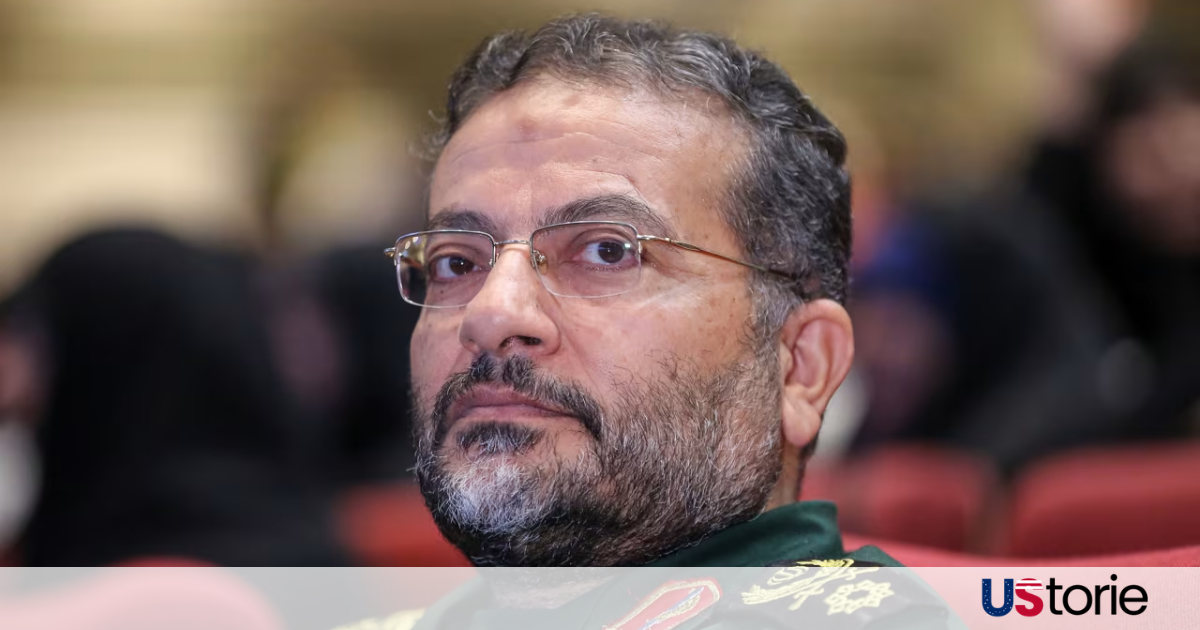
The geopolitical landscape of the Middle East shifted violently on Tuesday, March 17, 2026, as the Israeli Defense Forces (IDF) confirmed the successful elimination of Ali Larijani, Iran’s top security leader and a pivotal architect of the regime’s regional military strategy. The precision airstrike, which targeted a high-security compound, marks the most significant blow to Tehran’s leadership since the start of the 2026 conflict.
In immediate and fiery retaliation, Iranian-backed militias launched a coordinated assault on the U.S. Embassy in Baghdad, utilizing long-range suicide drones and rockets. The simultaneous events have pushed the United States and Israel into a state of total military readiness, as the “shadow war” of the past decade has officially transformed into a direct, high-stakes confrontation between regional powers.
The Elimination of Ali Larijani: A Precision Strike
Ali Larijani was not just a politician; he was a central figure in Tehran’s aggressive military response to U.S.-Israeli operations. As the key coordinator for Iran’s security apparatus under the hardline leadership of Mojtaba Khamenei, Larijani was responsible for overseeing drone deployments and proxy coordination across the “Axis of Resistance.”
According to the CNN live coverage of the Iran-Israel war, the strike was executed after intelligence tracked Larijani to a command center used to plan maritime disruptions in the Gulf. The IDF spokesperson stated that Larijani was a “legitimate military target” whose removal was necessary to prevent imminent “large-scale drone swarms” directed at civilian centers.
[Image: A tactical map showing the strike location and the proximity of the US Embassy in Baghdad to the launch sites]
For a detailed breakdown of the high-tech munitions used in this operation and the 2026 aviation tactics employed by the IDF, UStorie has published a comprehensive military hardware review.
Chaos in Baghdad: US Embassy Under Fire
Within hours of the news of Larijani’s death, the Green Zone in Baghdad became a battlefield. Multiple drones, reportedly of the “Karrar” class, targeted the U.S. Embassy complex. While the embassy’s C-RAM (Counter Rocket, Artillery, and Mortar) systems were seen intercepting several projectiles over the Tigris River, witnesses reported at least two impacts within the outer perimeter.
This escalation is a primary focus of our US News national security desk. The Trump administration has warned that any harm to American personnel will result in “disproportionate and overwhelming” consequences for Tehran. The Baghdad attack is seen by analysts as Iran’s way of signaling that it can strike American assets at will if Israel continues its decapitation strikes against Iranian leadership.
The “Fire and Fury” Doctrine in 2026
President Trump, speaking from a secure location, addressed the nation on Tuesday afternoon, praising the Israeli operation and reinforcing the U.S. commitment to “eliminating the masterminds of terror.” The current administration’s 2026 doctrine has been one of maximum military pressure, moving away from the containment strategies of previous years.
To see how these military escalations are impacting global fuel prices and international travel corridors in the Middle East, visit our Sports and Lifestyle section, where we track the economic fallout of the 2026 conflict.
Who was Ali Larijani? A Legacy of Conflict
Larijani’s career spanned decades of Iranian revolutionary politics. He served in various capacities, from the head of national broadcasting to the Speaker of the Parliament, before taking on his most lethal role as a security strategist. His death creates a massive vacuum within the Iranian High Command at a time when they are already reeling from internal dissent and external military pressure.
At UStorie, we are closely monitoring the internal power struggles currently occurring within Tehran as Mojtaba Khamenei looks for a successor who can match Larijani’s strategic depth and loyalty.
Final Thoughts: A World on the Brink
The killing of Ali Larijani and the subsequent attack on the U.S. Embassy mark a point of no return for the 2026 conflict. The “diplomatic backchannels” that once existed between Washington and Tehran have effectively collapsed. As both sides brace for further retaliation, the international community is watching the skies over Baghdad and Tehran with bated breath.
The events of March 17 will go down in history as the day the 2026 war entered its most dangerous phase yet.