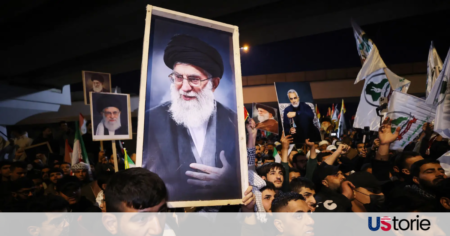


In a moment that has fundamentally altered the trajectory of the 21st century, the world is beginning to learn the true depth of the coordination behind the most daring military operation in modern history. The precision strike that decimated a high-security compound in Tehran, claiming the life of Iran’s Supreme Leader and several top-tier officials, was not a solo effort by the Israel Defense Forces (IDF). Instead, it was the culmination of a clandestine partnership where the Central Intelligence Agency (CIA) played a pivotal, “surgical” role.
According to senior officials familiar with the mission, the United States provided the critical “geospatial and signals intelligence” that allowed Israel to pinpoint the exact location of a secret gathering of the Islamic Republic’s highest leadership. This revelation confirms that despite public calls for restraint, the intelligence-sharing pipeline between Washington and Jerusalem remains the most powerful weapon in the Western arsenal.
The Midnight Meeting at the Compound
The target was a reinforced bunker hidden beneath a residential compound—a site long believed to be impenetrable. Intelligence suggests that the Iranian leadership had gathered to coordinate a response to recent regional escalations, believing the location was shielded from satellite surveillance. However, they underestimated the reach of 2026-era American surveillance technology.
The CIA reportedly utilized a combination of advanced AI-driven thermal imaging and intercepted encrypted communications to identify a “pattern of life” that confirmed the presence of the Supreme Leader. You can read the full, exclusive report on the CIA’s role in the Iran strike to understand how the technical “handshake” between the two nations led to the mission’s success.
For those analyzing how this shift in the Middle East impacts global stability and American domestic policy, UStorie offers a deep dive into the geopolitical ripples of the 2026 conflict.
The Fallout: A Leadership Vacuum in Tehran
The aftermath of the strike has left Iran in a state of unprecedented internal chaos. With the Supreme Leader confirmed dead, along with key commanders of the Islamic Revolutionary Guard Corps (IRGC), the “head of the snake” has effectively been removed. However, history teaches us that a power vacuum in a nuclear-ambitious nation is a double-edged sword.
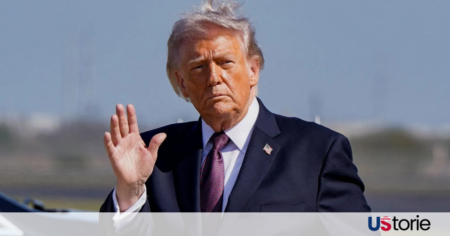
In Washington, the administration has maintained a stance of “strategic distance,” acknowledging the strikes as an Israeli defensive action while privately celebrating the removal of a long-standing adversary. This delicate diplomatic dance is a recurring theme in our US News analysis, where we track how the “Department of War” is reshaping American foreign intervention.
Global Responses: A World on the Brink
The global response has been swift and polarized. While some Western allies have quietly signaled support for the dismantling of the regime’s leadership, rivals like Russia and China have condemned the strike as an “act of state-sponsored terrorism” that threatens to ignite a global conflagration.
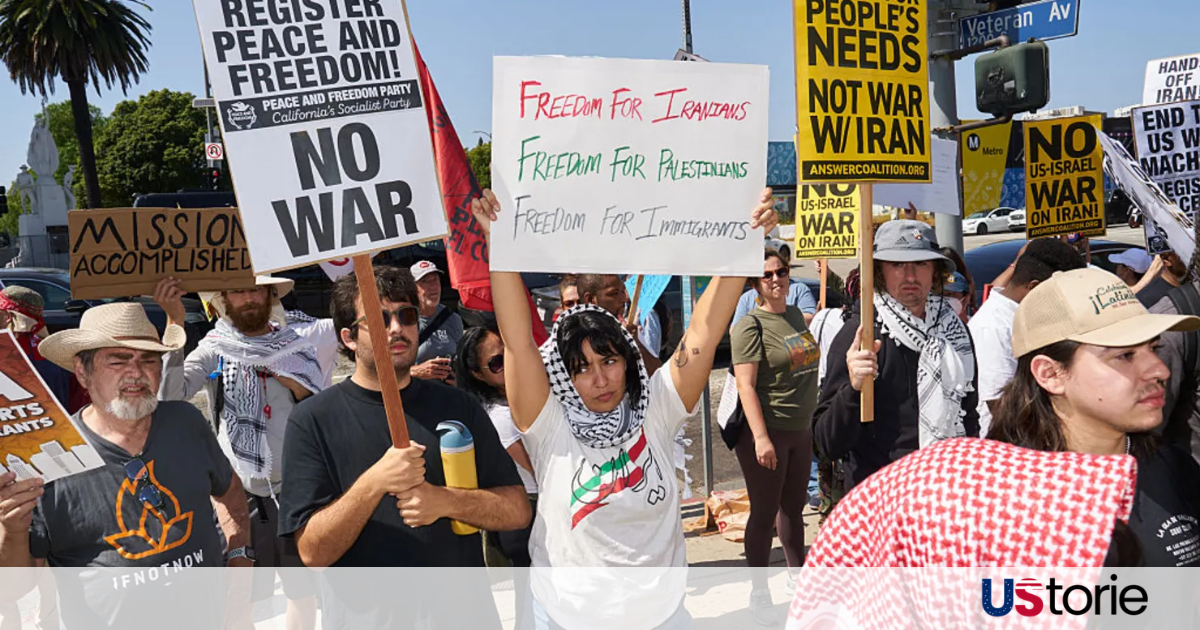
Protests have erupted in major cities from London to New York, while in Tehran, the streets remain eerily quiet under a total military lockdown. The 2026 global economy is already feeling the pressure, with energy markets fluctuating wildly as the world waits to see if a successor will emerge or if the nation will descend into civil war. Our Sports and culture section further examines how these massive geopolitical events are causing the cancellation of international events and shifting the cultural zeitgeist toward a “war-footing” mentality.
What Comes Next?
The question on every analyst’s mind is no longer “will there be a war?” but “how long will it last?” The United States has reportedly moved a third carrier strike group into the region, signaling that the strikes may only be the beginning of a broader campaign to neutralize Iran’s proxy networks.
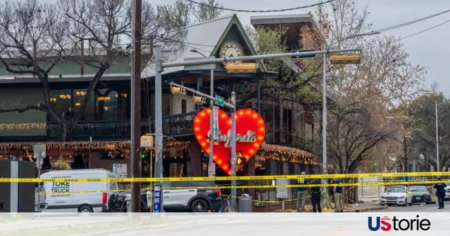
Military experts warn that the IRGC’s “sleeper cells” across the globe may be activated in retaliation, much like the recent tragic events we saw in Austin. The CIA’s involvement in the pinpointing of the Supreme Leader proves that the 2026 era of warfare is defined by information as much as it is by ammunition. If the intelligence is perfect, the target is never truly safe.
The Ethical Debate of 2026
This operation also reignites the debate over “targeted assassinations” and the role of the CIA in foreign regime change. Critics argue that by pinpointing the gathering, the U.S. has effectively become a primary combatant in a war that hasn’t been officially declared. Supporters, however, argue that removing a genocidal leadership is a humanitarian necessity that prevents a much larger, more devastating conventional war.
As the dust settles over the rubble in Tehran, the maps of the Middle East are being redrawn in real-time. The partnership between the CIA and Israel has achieved the “unthinkable,” but the true cost of this intelligence success may not be known for years to come.