

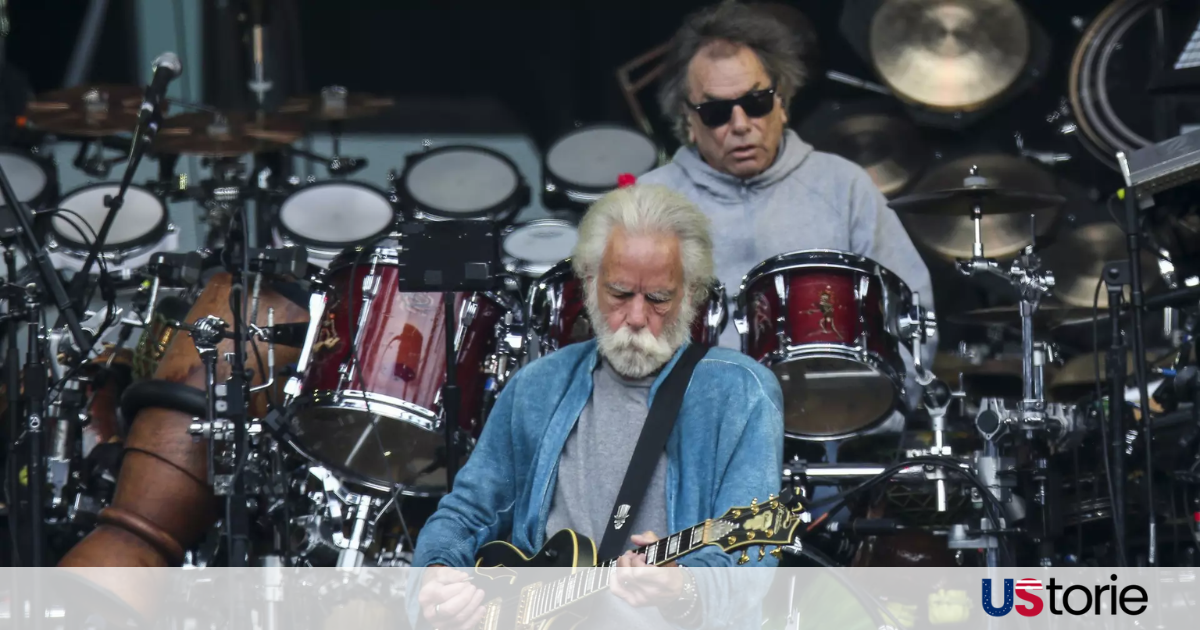
Some musicians leave behind albums. Others leave behind memories. But when Bob Weir passed away, it felt like he left behind a living atmosphere one that still hums in old concert tapes, smoke-filled rooms, and the quiet pause between guitar notes. This wasn’t the kind of loss marked by shock alone. It was softer, heavier, and strangely familiar, like the end of a song you never wanted to finish.
More Than a Tribute, a Passing of Trust
When Mayer first stepped into the world of the Grateful Dead through Dead & Company, reactions were mixed. Some fans were skeptical. Others were curious. But Bob Weir never seemed concerned with public approval. His approach was always about feel, connection, and listening.
Weir didn’t ask Mayer to recreate the past. He invited him to participate in the present. Night after night, the music unfolded differently, sometimes wandering, sometimes collapsing, sometimes soaring. That freedom that willingness to let the music lead was Weir’s philosophy.
Mayer has often spoken about how playing with Weir changed him, not just as a guitarist, but as a musician who learned to value space over flash. In that sense, his tribute felt less like goodbye and more like acknowledgment: I learned from you. I was trusted.
For deeper coverage on major cultural moments shaping the U.S., visit
https://ustorie.com/category/us-news/
Haight-Ashbury Feels It Again
As news spread, attention drifted back to Haight-Ashbury, the spiritual home of the Dead. This wasn’t nostalgia tourism. It was memory pulling people back.
Fans gathered without a plan. Guitars appeared. Someone rolled a joint. Someone else told a story that started with, “I saw them in ’72…” The rituals weren’t organized they never are. That’s part of the culture Bob Weir helped build.
Grief, guitars, and ganja not as spectacle, but as shared language.
Why Bob Weir Was Different
Bob Weir was never the loudest presence in the room. He didn’t chase virtuosity for its own sake. His guitar work often confused casual listeners because it avoided the obvious. But musicians understood it. He played the negative space. He trusted rhythm and restraint.
In an era that increasingly rewards speed, perfection, and algorithms, Weir’s approach feels almost rebellious in hindsight. His music asked listeners to stay present, to accept imperfection, and to embrace the moment rather than the result.
That philosophy now feels especially relevant in a world shaped by technology and instant consumption. To explore how tech continues to reshape culture and creativity, see
https://ustorie.com/category/technology/
The Dead Were Always Bigger Than Death
What’s striking is how little finality there feels in Weir’s passing. The Dead were never about endings. They were about continuation songs that evolved, shows that blurred together, communities that outlived the band itself.
Fans aren’t just mourning. They’re gathering, listening, remembering. Bootlegs are being replayed. Old stories are resurfacing. Younger fans are discovering the music for the first time.
That’s not nostalgia. That’s legacy in motion.
For more long-form stories on culture, music, and moments that matter, visit
https://ustorie.com/