
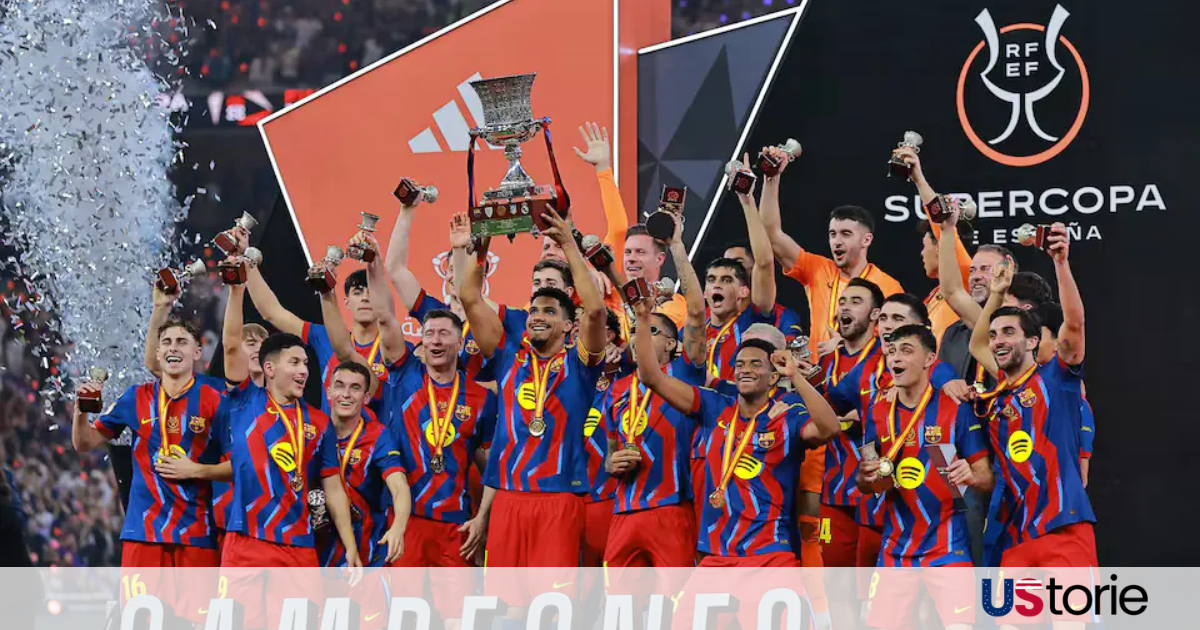
There’s a particular silence that hits right after a Clasico final ends the kind where one half of the stadium freezes and the other explodes. When Barcelona players ran toward the corner flag, arms raised, it felt less like a trophy ceremony and more like a release. Weeks of pressure, expectation, and rivalry poured out in one moment.
Finals don’t always reward the better team. Sometimes they reward the braver one. On this night, Barcelona were both.
From kickoff, it was clear Barcelona hadn’t come to survive the Super Cup final they came to own it. The ball moved quicker through midfield, the press arrived a second earlier, and every challenge carried intent. Real Madrid, so often comfortable in chaos, looked unusually unsettled.
The opening goal didn’t arrive out of nowhere. It followed a stretch where Barcelona pinned Madrid deep, recycling possession patiently until space finally cracked open. The finish was calm, almost casual, but the reaction told the story fists clenched, bench roaring, fans already sensing something bigger was unfolding.
What separated Barcelona wasn’t just tactics, but temperament. In a match that usually spirals into emotion, they stayed composed. Instead of chasing moments, they built them. Madrid tried to respond with pace and long switches, but Barcelona’s shape kept snapping back into place.
By the time the second goal arrived, Madrid’s frustration had started to show. A missed clearance, a half-step late in midfield small details, but finals punish those. Barcelona didn’t hesitate. The move was clean, collective, and ruthless.
Matches like this often dominate global conversation, especially on platforms covering football’s wider cultural impact such as https://ustorie.com/, where rivalries are discussed not just as games, but as moments that define seasons.
The second half brought the expected Madrid push. More bodies forward. More risk. For a brief stretch, Barcelona were tested. One sharp save and a last-ditch block shifted momentum back again those are the moments fans remember long after the scoreline fades.
Rather than retreat, Barcelona doubled down. The third goal felt like confirmation rather than surprise. It arrived through sustained pressure, not desperation the mark of a team in control.
From the stands, the contrast was striking. Barcelona supporters sang with growing confidence, while Madrid fans waited for a spark that never quite arrived. The Super Cup, often dismissed as a warm-up trophy, suddenly felt heavy with meaning.
Beyond bragging rights, this win could shape Barcelona’s campaign. Confidence travels fast in football. Beating your biggest rival in a final does something to a locker room belief sharpens, doubts quiet down. These psychological shifts are often explored in broader sports discussions under coverage like https://ustorie.com/category/us-news/.
For Madrid, the loss will sting but it also clarifies. The quality is still there. What’s needed now is adjustment, not panic. Rivalries don’t end on one night, but they do leave marks.
As football continues to evolve tactically, commercially, digitally Clasico nights remain timeless. The way fans consume them, analyze them, and relive them has changed, a trend increasingly covered in spaces like https://ustorie.com/category/technology/.
When the confetti settled and the trophy was raised, one truth stood clear: Barcelona didn’t just win a final. They delivered a reminder of identity, discipline, and why nights like this still matter.