

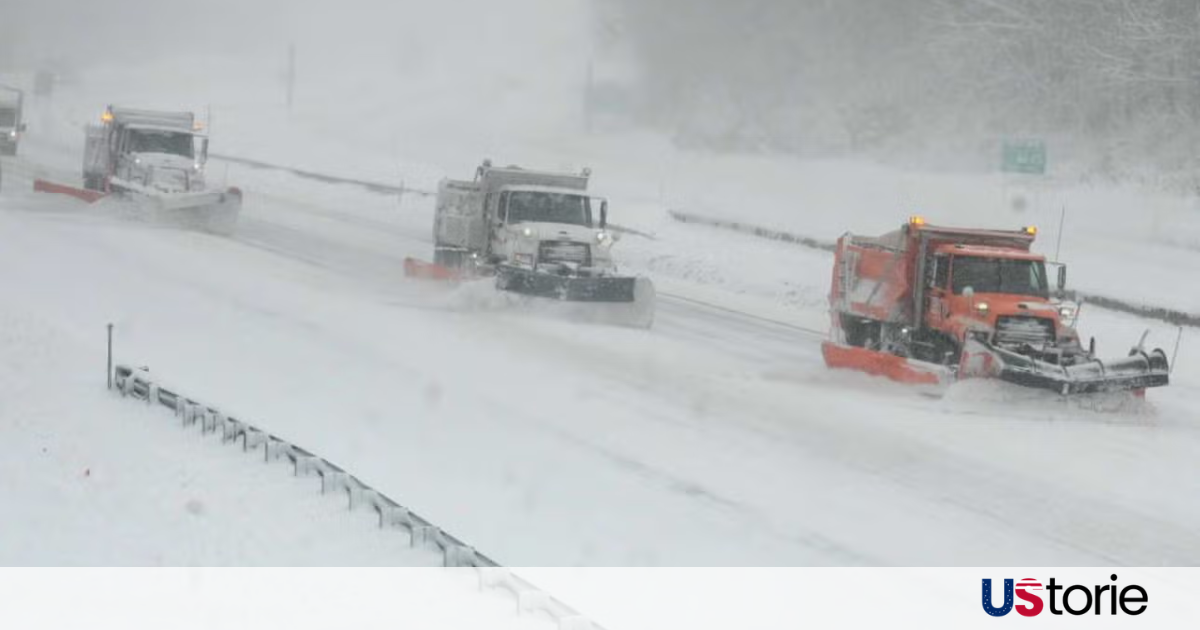
The American West is bracing for a meteorological onslaught that threatens to paralyze regional infrastructure. In what is being categorized as one of the most significant winter events of 2026, a massive storm system is barrelling toward the Western United States, bringing with it the promise of five feet of snow and life-threatening freezing temperatures. For logistics companies and daily commuters alike, the “Whiteout Warning” has shifted from a forecast to an imminent reality.
As the pressure drops across the Pacific Northwest and the Sierra Nevada, the traditional protocols for highway safety are being pushed to their limits. This isn’t just a seasonal dusting; it is a high-velocity weather event that is expected to shut down major transit arteries for days.
Highways Under Siege: The Impact on I-80 and Beyond
The most visible point of crisis is the projected impact on high-altitude mountain passes. Forecasters are warning that visibility will drop to near zero as the storm peaks. Interstate 80, a critical lifeline for cross-country commerce, is expected to bear the brunt of the accumulation. With up to five feet of snow anticipated in the higher elevations, state departments of transportation are already staging heavy equipment to manage what they describe as “impossible” driving conditions.
According to a detailed Autoblog report, the danger isn’t just the accumulation, but the rapid drop in temperature that will turn slush into black ice within minutes. For travelers, the message is clear: if you are not already at your destination, you may be stranded for the duration of the week.
For an investigative look at how these extreme weather patterns are affecting the 2026 logistics and shipping industry, ustoriemedia has published a detailed “Winter Logistics” impact study.
The Freezing Threshold: A Challenge for Infrastructure
The secondary flashpoint of this storm is the sustained freezing temperatures following the snowfall. Meteorologists are predicting a “Polar Plunge” that will see mercury levels drop 20 to 30 degrees below average. This creates a theological tug-of-war between public safety and economic necessity: how long can cities remain shut down before the cost of the “Deep Freeze” outweighs the risk of travel?
Unlike previous storms where the snow melted quickly, the 2026 system is expected to keep the West in a sub-zero grip for at least 72 hours. This puts an immense strain on power grids and residential heating systems. At ustoriemedia, we are monitoring the regional power alerts to keep our readers updated on potential blackouts and emergency shelter locations.
Survival and Strategy: Navigating the 2026 Blizzard
The rise of extreme weather events in the U.S. has led to a “New Normal” for Western residents. Local governments are utilizing digital emergency alerts to warn citizens of the “Death Zones”—areas where snow drifts are expected to exceed vehicle heights. When this demographic hears a “Winter Storm Warning,” they no longer see it as a minor inconvenience; they see it as a logistical battle.
State troopers have already begun implementing mandatory chain requirements, and in some cases, total closures of scenic mountain routes. The goal is to avoid the massive pile-ups and strandings that have characterized previous years. The focus remains on keeping the “Main Lines” open for emergency vehicles while discouraging all non-essential travel.
Final Thoughts: Nature’s Reckoning
The upcoming Western U.S. winter storm represents a fascinating test of modern resilience. As 2026 progresses, the ability of our highway systems to withstand five feet of snow and a record-breaking freeze will dictate the safety of thousands. In the contest between “Human Planning” and “Nature’s Fury,” the stakes have never been higher.
The Whiteout Reckoning has arrived, and for those in the path of the storm, the window for preparation is closing fast.