

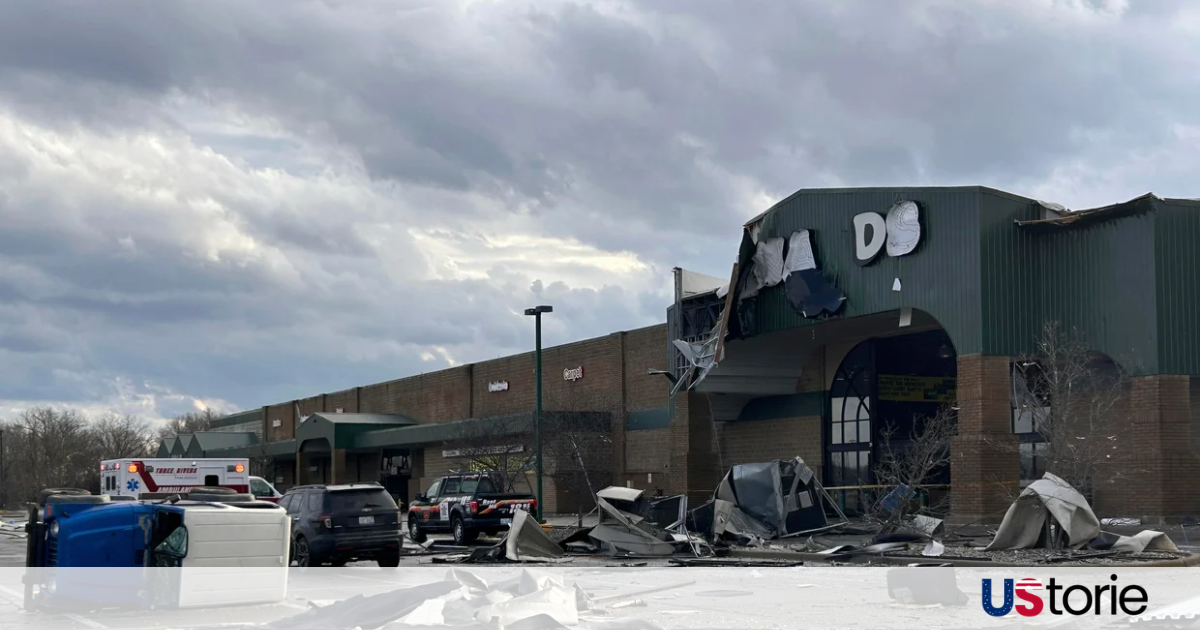
The first major severe weather outbreak of 2026 has left a trail of devastation across the Central United States, claiming at least eight lives and leaving dozens injured. On Friday, March 6, a series of powerful supercell thunderstorms tore through Southwest Michigan, while earlier storms on Thursday night took a tragic toll in rural Oklahoma.
In Michigan, where tornadoes are historically rare in early March, the National Weather Service (NWS) issued several “Particularly Dangerous Situation” (PDS) warnings. The resulting funnel clouds reduced homes to rubble, crippled local power grids, and prompted Governor Gretchen Whitmer to activate the State Emergency Operations Center to coordinate an “all-hands-on-deck” response.
Michigan: A Deadly Afternoon in Branch and Cass Counties
The most severe impact in Michigan occurred in Branch County, specifically in the Union Lake area near Union City. The Branch County Sheriff’s Office confirmed three fatalities and at least 12 injuries after a massive tornado swept through the community around 4:40 PM. Witnesses described a “terrifying” scene as the vortex lifted houses off their foundations and shredded mature trees.
About 50 miles to the southwest, officials in Cass County confirmed one additional death and several injuries after a tornado touched down near Edwardsburg. “Multiple large structures—including homes and pole barns—sustained damage ranging from major structural impacts to complete destruction,” emergency officials stated.
In the city of Three Rivers, a tornado ripped the roof off a Menards hardware store and damaged a strip mall. Miraculously, despite the heavy structural damage, no immediate fatalities were reported at that specific site as employees and customers scrambled for cover.
Oklahoma: Tragic Losses in Beggs and Fairview
The Michigan fatalities followed a night of horror in Oklahoma. On Thursday, March 5, a mother and her 13-year-old daughter were killed near Fairview when their vehicle was struck by a tornado during the initial wave of the storm system. Oklahoma Governor Kevin Stitt expressed his grief, stating the tragedy “claimed the lives of a mother and daughter… I am praying for the family.”
By Friday, the death toll in Oklahoma rose further as two more people were confirmed dead in Beggs, a small community in Okmulgee County. Local search and rescue teams worked through the night to clear debris-choked roads and account for residents in the path of the four-mile-long damage track.
For the latest visual updates and live coverage, check out the full CBS News report on the Michigan and Oklahoma tornadoes.
For more detailed tactical maps and real-time casualty updates from these affected regions, UStorie provides an in-depth visual dashboard of the 2026 storm tracks.
The Science Behind the Outbreak
Meteorologists point to a combination of an unusually warm air mass for early March and a surge of moisture from the Gulf of Mexico as the catalyst for the violence. The shift in the jet stream provided the necessary shear to turn these storms into rotating supercells.
This early start to the 2026 tornado season has put over 70 million people on alert. Our US News weather desk is monitoring the front as it moves eastward, with potential threats still looming for parts of the Ohio Valley and Southeast through the weekend.
Recovery and Safety Efforts
With thousands of residents currently without power and temperatures expected to drop over the weekend, the focus has shifted to humanitarian aid.
Michigan Response: Governor Whitmer has authorized the National Guard to assist with debris removal in St. Joseph and Branch counties.
Oklahoma Response: FEMA teams have begun arriving in Okmulgee County to assess the extent of the damage for federal aid eligibility.
Residents in the impacted communities are urged to remain weather-aware and avoid downed power lines. To learn more about how local sports venues and community centers are being used as temporary shelters, visit our Sports and Lifestyle section.
A Stark Warning for the Season
The scale of this early March outbreak serves as a grim reminder of the unpredictability of the 2026 spring season. For states like Michigan, which average only 15 tornadoes per year, the intensity of this event has raised questions about changing climate patterns and the need for more robust early-warning infrastructure in the Midwest.
As the communities of Union City, Fairview, and Beggs begin the long process of mourning and rebuilding, the nation watches with heavy hearts, reminded once again of the raw power of nature.